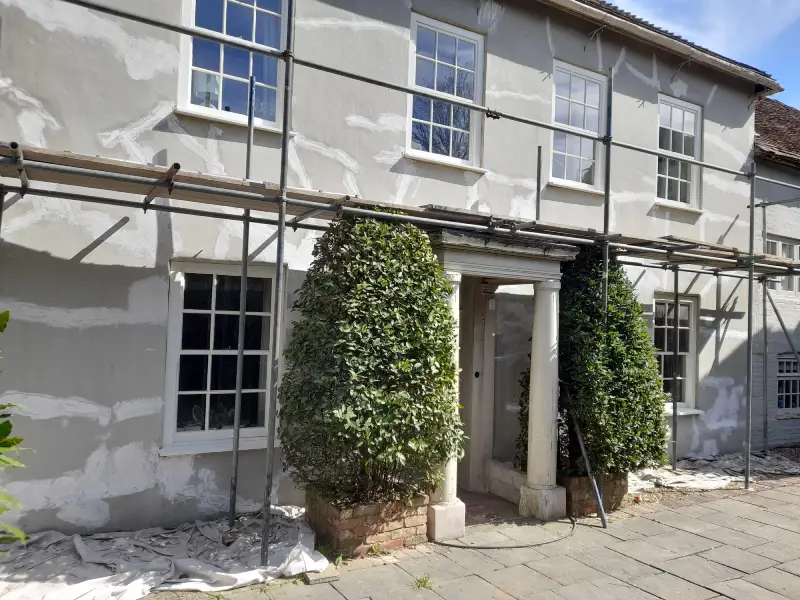
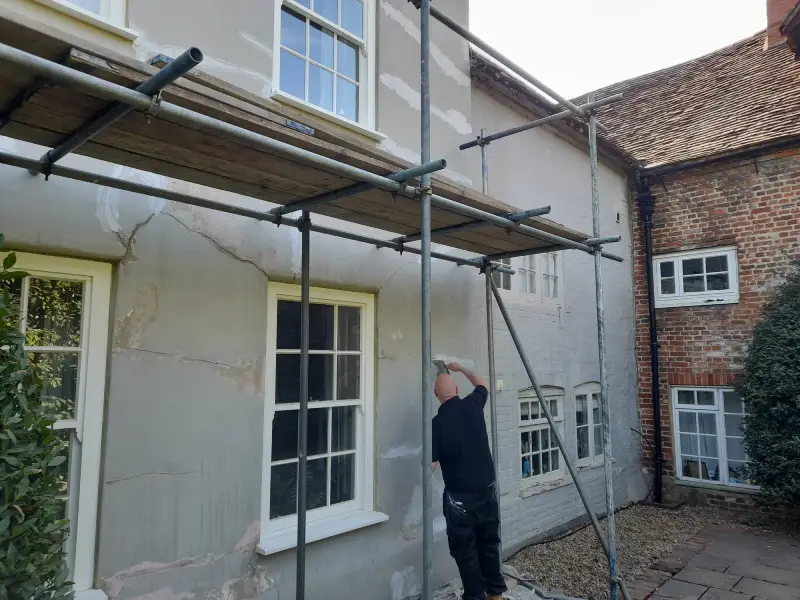
This Grade II listed property had previously been coated with an inappropriate modern plastic-based masonry paint, which is not compatible with traditional lime substrates. Unlike mineral-based paints, plastic-based products are not fully breathable and can trap moisture within the structure. This trapped moisture can lead to internal damp issues and cause the building to ‘sweat,’ which is particularly harmful to historic properties constructed with lime-based materials.
For buildings of this nature, it is essential to use a fully breathable, mineral-based paint system to allow moisture to pass through the substrate and evaporate naturally. We always recommend KEIM mineral paints for this type of work due to their excellent breathability, durability, and compatibility with traditional lime plasters and renders.
To prepare the building properly, all loose and flaking paint was carefully removed. Areas of damage were repaired using a high-quality lime filler, ensuring compatibility with the existing lime substrate. The entire surface was then treated with KEIM Algicid, a biocide wash designed to eliminate algae, moss, and mould spores, ensuring a clean and stable surface for subsequent coatings.
Repaired and uneven sections will be further levelled with KEIM Contact Grob, a textured primer used to even out surface variations and improve adhesion. Finally, the property will receive two full coats of KEIM Soldalit, a premium sol-silicate mineral paint that provides long-lasting, breathable protection while maintaining the aesthetic integrity of the building.
The golden rule when working with lime-based substrates is simple: never apply standard plastic-based masonry paints. They may be cheaper in the short term but can cause significant long-term damage to traditional buildings.